<?xml version="1.0" encoding="utf-8"?>
<rss version="2.0"
	xmlns:content="http://purl.org/rss/1.0/modules/content/"
	xmlns:wfw="http://wellformedweb.org/CommentAPI/"
	xmlns:dc="http://purl.org/dc/elements/1.1/"
	xmlns:atom="http://www.w3.org/2005/Atom"
	>

<channel>
	<title>bodmas blog</title>
	<atom:link href="http://bodmas.org/blog/feed/" rel="self" type="application/rss+xml" />
	<link>http://bodmas.org/blog</link>
	<description>Keith Peter Burnett's blog about Maths teaching and ILT</description>
	<pubDate>Mon, 30 Jun 2008 21:08:53 +0000</pubDate>
	<generator>http://wordpress.org/?v=2.5</generator>
	<language>en</language>
			<item>
		<title>Just Suppose&#8230;</title>
		<link>http://bodmas.org/blog/learning/just-suppose/</link>
		<comments>http://bodmas.org/blog/learning/just-suppose/#comments</comments>
		<pubDate>Mon, 30 Jun 2008 21:05:46 +0000</pubDate>
		<dc:creator>Keith Burnett</dc:creator>
		
		<category><![CDATA[Learning]]></category>

		<category><![CDATA[education]]></category>

		<category><![CDATA[policy]]></category>

		<category><![CDATA[reading]]></category>

		<guid isPermaLink="false">http://bodmas.org/blog/?p=693</guid>
		<description><![CDATA[Frank Coffield: Just Suppose Teaching and Learning Became the First Priority. Summer reading from the LSN.]]></description>
			<content:encoded><![CDATA[	<p><img src='http://bodmas.org/blog/images/frankcoffieldjustsuppose.png' alt='Frank Coffield Just Suppose Teaching and Learning Became the First Priority' /></p>

	<p><a href="https://www.lsneducation.org.uk/user/order.aspx?code=080052">Just Suppose Teaching and Learning Became the First Priority</a>. Frank Coffield has provided some summer reading for all of us in FE. Just suppose&#8230;</p>

	<p><blockquote>I learned from my father, as he learned from his, to hear the music, the excitement and the hope in the word &#8216;education&#8217;. I also learned that it is the job of teachers to help other people&#8217;s children to hear and respond to that music. We do it because teaching is a noble profession, which dedicates itself to the lot of those who have not had our advantages.</blockquote></p>


 ]]></content:encoded>
			<wfw:commentRss>http://bodmas.org/blog/learning/just-suppose/feed/</wfw:commentRss>
		</item>
		<item>
		<title>NeoOffice for Mac OS X</title>
		<link>http://bodmas.org/blog/ilt-ideas/neooffice-for-mac-os-x/</link>
		<comments>http://bodmas.org/blog/ilt-ideas/neooffice-for-mac-os-x/#comments</comments>
		<pubDate>Sun, 29 Jun 2008 11:15:36 +0000</pubDate>
		<dc:creator>Keith Burnett</dc:creator>
		
		<category><![CDATA[ILT]]></category>

		<category><![CDATA[Ubuntu]]></category>

		<category><![CDATA[MacOS]]></category>

		<category><![CDATA[sofware]]></category>

		<guid isPermaLink="false">http://bodmas.org/blog/?p=692</guid>
		<description><![CDATA[NeoOffice is a build of OpenOffice that integrates with the Mac OS X desktop much better than OpenOffice does.]]></description>
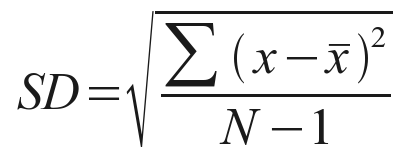
			<content:encoded><![CDATA[	<p><img src='http://bodmas.org/blog/images/neoofficeaquainterface400.jpg' alt='NeoOffice works cross platform with OpenOffice and provides an Aqua native look' border="1" /></p>

	<p>As I find myself using OpenOffice more on the Asus EeePC, I decided to put OpenOffice back on my iBook laptop. OpenOffice itself needs the <span class="caps">X11</span> desktop manager and runs slowly on a 512Mb G4 based laptop. <a href="http://www.neooffice.org/neojava/en/index.php">NeoOffice</a> is a version of OpenOffice that integrates better with Mac <span class="caps">OS X </span>- there is the familiar menu bar at the top of the screen and the Save and Open dialogue boxes are generated from the Finder.</p>

	<p>NeoOffice takes a bit of time to load, but once running, it seems more responsive than OpenOffice.  Some <a href="http://bodmas.org/blog/ilt-ideas/openoffice-20-on-mac/">earlier issues</a> with the compatibility of the fonts and sizes used in the Formula editor between the various flavours of OpenOffice seem to have been sorted out in version 2.</p>

	<p>The NeoOffice project is run by a few people in Germany and so I am considering a donation once I sort my PayPal account out. $5 does not seem excessive for a full Office suite.</p>

	<p>PS: Yes I know that &sigma; should really be used for the standard deviation of the distribution and that the formula is the <em>population</em> standard deviation! I just needed a sample to test compatibility across OpenOffice on Windows, Debian and Mac <span class="caps">OS X</span>.</p>
 ]]></content:encoded>
			<wfw:commentRss>http://bodmas.org/blog/ilt-ideas/neooffice-for-mac-os-x/feed/</wfw:commentRss>
		</item>
		<item>
		<title>Delphinium</title>
		<link>http://bodmas.org/blog/photos/delphinium/</link>
		<comments>http://bodmas.org/blog/photos/delphinium/#comments</comments>
		<pubDate>Fri, 27 Jun 2008 07:00:09 +0000</pubDate>
		<dc:creator>Keith Burnett</dc:creator>
		
		<category><![CDATA[Photos]]></category>

		<guid isPermaLink="false">http://bodmas.org/blog/?p=691</guid>
		<description><![CDATA[Delphinium flower mimics a bee. ]]></description>
			<content:encoded><![CDATA[	<p><img src='http://bodmas.org/blog/images/delphiniumcrop400.jpg' alt='Delphinium flower mimics bee' border="1" /></p>

	<p>Delphinium flower mimics a bee &#8211; the local Biologists think it is a ploy to ensure pollination. Rough macro photo taken with Nikon <span class="caps">D40</span>.</p>
 ]]></content:encoded>
			<wfw:commentRss>http://bodmas.org/blog/photos/delphinium/feed/</wfw:commentRss>
		</item>
		<item>
		<title>Geoff Petty</title>
		<link>http://bodmas.org/blog/learning/geoff-petty/</link>
		<comments>http://bodmas.org/blog/learning/geoff-petty/#comments</comments>
		<pubDate>Thu, 26 Jun 2008 07:00:14 +0000</pubDate>
		<dc:creator>Keith Burnett</dc:creator>
		
		<category><![CDATA[Learning]]></category>

		<guid isPermaLink="false">http://bodmas.org/blog/?p=689</guid>
		<description><![CDATA[Geoff Petty gives out a lot of Word files on his Web site. Useful.]]></description>
			<content:encoded><![CDATA[	<p><a href="http://bodmas.org/blog/images/geoffpettyactivelearningwordcloud.png"><img src='http://bodmas.org/blog/images/geoffpettyactivelearningwordcloud400.png' alt='geoff petty 25 to teach without teaching word cloud' /></a></p>

	<p><a href="http://www.geoffpetty.com/">Geoff Petty</a> writes a well known textbook about teaching and learning. Geoff provides a large number of Word files on the <a href="http://www.geoffpetty.com/downloads.html">downloads page of his Web site</a>. I especially like the &#8216;25 ways to teach without teaching&#8217; handout, the main message being &#8220;What the learner does is more important than what the teacher does&#8221;.</p>

	<p>I could not resist feeding the plain text from <cite>25 ways to teach without teaching</cite> into <a href="http://wordle.net/">Wordle</a>. The word cloud above is the result&#8230; I think these word clouds make for interesting PowerPoint slides? I&#8217;m trying to work out why &#8216;students&#8217; appears twice.</p>
 ]]></content:encoded>
			<wfw:commentRss>http://bodmas.org/blog/learning/geoff-petty/feed/</wfw:commentRss>
		</item>
		<item>
		<title>Neison&#8217;s Moon map</title>
		<link>http://bodmas.org/blog/notes/neisons-moon-map/</link>
		<comments>http://bodmas.org/blog/notes/neisons-moon-map/#comments</comments>
		<pubDate>Wed, 25 Jun 2008 07:00:30 +0000</pubDate>
		<dc:creator>Keith Burnett</dc:creator>
		
		<category><![CDATA[Notes]]></category>

		<guid isPermaLink="false">http://bodmas.org/blog/?p=690</guid>
		<description><![CDATA[Scanning a famous Moon map]]></description>
			<content:encoded><![CDATA[	<p><img src='http://bodmas.org/blog/images/neisonmapxxiidetail.gif' alt='detail of map xxii from The Moon by Edmund Neison' /></p>

	<p>At <a href="http://bodmas.org/neison">http://bodmas.org/neison</a> I&#8217;m putting low resolution scans of <a href="http://en.wikipedia.org/wiki/Edmund_Neville_Nevill">Edmund Neison</a>&#8217;s 22 section Moon map as published in his 1876 book <cite>The Moon and the condition and configuration of its surface</cite>.</p>

	<p>The maps use a &#8216;hatchure&#8217; technique and have survived photocopying well. The usual South Up convention is used on the maps because of the Newtonian reflector used often in Victorian observatories. The Wikipedia entry for Neison (AKA Neville Nevill) has been edited well from my original draft, itself based  on the Royal Astronomical Society obituary. I heard from a grandson of Neison&#8217;s on the day of the <a href="http://bodmas.org/blog/notes/lunar-eclipse/">Venus transit</a>!</p>
 ]]></content:encoded>
			<wfw:commentRss>http://bodmas.org/blog/notes/neisons-moon-map/feed/</wfw:commentRss>
		</item>
		<item>
		<title>Wordle</title>
		<link>http://bodmas.org/blog/ilt-ideas/wordle/</link>
		<comments>http://bodmas.org/blog/ilt-ideas/wordle/#comments</comments>
		<pubDate>Tue, 24 Jun 2008 07:00:42 +0000</pubDate>
		<dc:creator>Keith Burnett</dc:creator>
		
		<category><![CDATA[ILT]]></category>

		<category><![CDATA[Web]]></category>

		<guid isPermaLink="false">http://bodmas.org/blog/?p=688</guid>
		<description><![CDATA[Make tag clouds from text]]></description>
			<content:encoded><![CDATA[	<p><img src='http://bodmas.org/blog/images/bteccriteriacloud.png' alt='tag cloud made from the Btec Applied Science criteria using wordle' width="400" height="300" /></p>

	<p><a href="http://wordle.net/">Wordle</a> draws a word cloud from text you copy and paste into a window. The cloud above was generated from the <a href="http://bodmas.org/blog/forensic-ict/btec-award-criteria/"><span class="caps">BTEC </span>Applied Science assessment criteria</a> for all the units. I can imagine using a word cloud like this to pull out the key words used in many of the criteria. These words are similar to the &#8216;cue words&#8217; in <a href="http://bodmas.org/blog/notes/the-u-word/">Blooms taxonomy</a> of cognitive learning objectives, and perhaps I can enable students to take on board the &#8216;assessment cues&#8217; using this visual presentation. Via <a href="http://fm.schmoller.net/2008/06/elegant-tag-cou.html">Seb Schmoller</a>.</p>
 ]]></content:encoded>
			<wfw:commentRss>http://bodmas.org/blog/ilt-ideas/wordle/feed/</wfw:commentRss>
		</item>
		<item>
		<title>Rotunda</title>
		<link>http://bodmas.org/blog/notes/rotunda/</link>
		<comments>http://bodmas.org/blog/notes/rotunda/#comments</comments>
		<pubDate>Mon, 23 Jun 2008 07:00:46 +0000</pubDate>
		<dc:creator>Keith Burnett</dc:creator>
		
		<category><![CDATA[Notes]]></category>

		<guid isPermaLink="false">http://bodmas.org/blog/?p=687</guid>
		<description><![CDATA[Birmingham's landmark building is focus of an exhibition]]></description>
			<content:encoded><![CDATA[	<p><blockquote>I tracked Jim Roberts down, then in his 80s, to his home on the edge of the New Forrest where he lived with his snow white husky. After three generous gin and tonics and hearing Jim&#8217;s epic life story, I summoned [the] courage to suggest the radical changes to Jim&#8217;s most famous building. At the, Jim disappeared into his bedroom to return with his original sketches from 1961, the year I was born, of the Rotunda as we now proposed with spandrel panels separating the full height glazing, however he explained that this had not been possible in the 1960s due to technical and economic limits. <cite>Glenn Howells, architect of the refurbished Rotunda in Birmingham.</cite></blockquote></p>

	<p>Nic Gaunt&#8217;s <a href="http://www.newrotunda.co.uk/newrotunda/EXHIBITION%20information.html">exhibition about the Rotunda</a> is called Rotunda &#8211; 21 Stories. Excellent photography and <a href="http://www.newrotunda.co.uk/newrotunda/BOOK%20information.html">the book</a> comes with a <span class="caps">DVD</span> of interviews. I especially like the looping back and &#8216;passing on&#8217; shown in the quote above. Howells encountered some resistance to his plan for renovating the Rotunda from the Twentieth Century Society and others who are concerned to preserve the landmark. We sometimes forget that what gets built is a compromise&#8230;</p>


 ]]></content:encoded>
			<wfw:commentRss>http://bodmas.org/blog/notes/rotunda/feed/</wfw:commentRss>
		</item>
		<item>
		<title>Spreadsheets to talk about</title>
		<link>http://bodmas.org/blog/maths/spreadsheets-to-talk-about/</link>
		<comments>http://bodmas.org/blog/maths/spreadsheets-to-talk-about/#comments</comments>
		<pubDate>Sat, 21 Jun 2008 11:28:55 +0000</pubDate>
		<dc:creator>Keith Burnett</dc:creator>
		
		<category><![CDATA[ILT]]></category>

		<category><![CDATA[Maths]]></category>

		<guid isPermaLink="false">http://bodmas.org/blog/?p=686</guid>
		<description><![CDATA[The humble spreadsheet can encourage students to talk about doing mathematics. Ideas and investigations you develop are futureproof. The 'small laptops' that are becoming more common allow more flexible use of class based pair and group work.]]></description>
			<content:encoded><![CDATA[	<p><img src='http://bodmas.org/blog/images/healysutherland.jpg' alt='Healy and Sutherland Exploring Mathematics with Spreadsheets 1991' border="1" /></p>

	<p>Exploring Mathematics with Spreadsheets by Healy and Sutherland was published in 1991. It contains ideas for pair and group work in Maths using basic spreadsheet functions. There are photocopyable masters to give to students and some teaching notes. The two pupils on the front cover are using an early version of <span class="caps">MS </span>Excel on what looks like a <a href="http://en.wikipedia.org/wiki/Macintosh_Classic">Mac Classic</a>. The logic was to use <a href="http://c2.com/cgi/wiki?PairProgramming">pair work as a way of encouraging talking about their thinking</a> as they investigate the problem or situation that they have been allocated. A nostalgic feature of the book is the comparison of spreadsheet software in the teachers notes, does anyone else remember Grasshopper, Viewsheet and Multiplan?</p>

	<p>An early activity is &#8216;find the formula&#8217; where one student puts a simple formula like =B3+2 into a cell when the other student isn&#8217;t looking. Then the other student can change the number in B3 and try to work out the formula. More advanced activities include finding the dimensions of a rectangle that maximise the area for a given perimeter (including graphing the way the area depends on the length of a side) and explorations of sequences (arithmetic, geometric and Fibonacci style).</p>

	<p>The punchline is that all the activities start <em>with a blank spreadsheet</em>. The students have to decide on the formulas, the layout and have to interpret the tables of numbers and to <em>decide</em> when a graph might be useful! It is this constructive use of the spreadsheet that keeps me using a few of these worksheets once or twice a year for half an hour or so. These activities work fine on OpenOffice Calc and on the Gnumeric spreadsheet, so you can use them on the <a href="http://bodmas.org/blog/ilt-ideas/podcasting-from-the-asus/">Asus EeePC</a> as well as the cheaper <a href="http://www.elonexone.co.uk/">Elonex One</a>. The Elonex looks as if it has AbiWord and Gnumeric as the &#8216;office&#8217; components.</p>

	<p><img src='http://bodmas.org/blog/images/computershopper1999spreadsheets.jpg' alt='Computer Shopper June 1999 Full Spread by Mike Bedford' /></p>

	<p>As you might have guessed, I&#8217;m having a bit of a clear out, and I came across an article from the June 1999 issue of Computer Shopper about using spreadsheets for technical applications. Again, the spreadsheets build up from basic formulas &#8211; in this case using the trig functions to simulate amplitude modulation and using a simple Euler method to solve a <a href="http://bodmas.org/blog/notes/lorenz-attractor/">famous set of three coupled non-linear differential equations</a>.</p>

	<p><a href="http://bodmas.org/blog/images/lorenzspreadsheetscreengrab.png"><img src='http://bodmas.org/blog/images/lorenzmaskxz380.jpg' alt='Lorenz Attractor X Z plane' /></a></p>

	<p>I built the Lorenz attractor spreadsheet in OpenOffice (using the 17 inch monitor) and reproduced the graphs shown in the article (having noticed the typo in the Lorenz equations). You can download my <a href='http://bodmas.org/blog/images/lorenzplots.ods' title='OpenOffice spreadsheet that integrates the Lorenz equations'>OpenOffice spreadsheet that integrates the Lorenz equations</a> [500Kb, <span class="caps">ODS</span> format].</p>

	<p>Moral: anything you develop for the humble spreadsheet program that uses basic functions and graphing is future proof, and students might find building the models informative.</p>

 ]]></content:encoded>
			<wfw:commentRss>http://bodmas.org/blog/maths/spreadsheets-to-talk-about/feed/</wfw:commentRss>
		</item>
		<item>
		<title>Ubiquitous computing</title>
		<link>http://bodmas.org/blog/ilt-ideas/ubiquitous-computing/</link>
		<comments>http://bodmas.org/blog/ilt-ideas/ubiquitous-computing/#comments</comments>
		<pubDate>Wed, 11 Jun 2008 20:42:50 +0000</pubDate>
		<dc:creator>Keith Burnett</dc:creator>
		
		<category><![CDATA[ILT]]></category>

		<category><![CDATA[Photos]]></category>

		<guid isPermaLink="false">http://bodmas.org/blog/?p=684</guid>
		<description><![CDATA[The multimedia capture device we all carry]]></description>
			<content:encoded><![CDATA[	<p><img src='http://bodmas.org/blog/images/phonecamerascan.jpg' alt='ubiquitous computing device business end' border="1" /></p>

	<p>My basic pay as you go mobile phone can take pictures (of dubious quality through its plastic lens and slightly off axis optics), and it can make sound recordings at low bit rates. If pushed, I can view this Web site and read and reply to e-mail &#8211; that requires a lot of navigating through menus. I can play mp3 tracks and I can download and view stacks of images in folders on the storage card. A colleague is experimenting with wrapping stacks of images in a Web page and copying that to the &#8216;web pages&#8217; folder on the storage card.</p>

	<p>Yesterday it was the moon. Today is cloudy, so can you guess what these two objects might be?</p>

	<p><strong>Object No 1</strong></p>

	<p><img src='http://bodmas.org/blog/images/mobilephoneobject01.jpg' alt='Object 1 - can you guess what it is?' border="1" /></p>

	<p>Maths students need one of these, preferably sharp and with a ruler&#8230;</p>

	<p><strong>Object No 2</strong></p>

	<p><img src='http://bodmas.org/blog/images/mobilephoneobject02.jpg' alt='Object 2 - first image' border="1" /></p>

	<p>I take this object on the daily bus ride and, sometimes, on trains.</p>

	<p><img src='http://bodmas.org/blog/images/mobilephoneobject2a.jpg' alt='Object 2 - second image' border="1" /></p>

	<p>Coming next: a podcast from the mobile phone to compare with the <a href="http://bodmas.org/blog/ilt-ideas/podcasting-from-the-asus/">Asus EeePC sound recorder</a> quality. Of course, the Asus is a proper computer that can plot graphs and send e-mails (without <span class="caps">RSI</span> of the thumb).</p>

 ]]></content:encoded>
			<wfw:commentRss>http://bodmas.org/blog/ilt-ideas/ubiquitous-computing/feed/</wfw:commentRss>
		</item>
		<item>
		<title>The Moon</title>
		<link>http://bodmas.org/blog/notes/the-moon/</link>
		<comments>http://bodmas.org/blog/notes/the-moon/#comments</comments>
		<pubDate>Wed, 11 Jun 2008 08:09:09 +0000</pubDate>
		<dc:creator>Keith Burnett</dc:creator>
		
		<category><![CDATA[Notes]]></category>

		<guid isPermaLink="false">http://bodmas.org/blog/?p=683</guid>
		<description><![CDATA[Moon on your mobile]]></description>
			<content:encoded><![CDATA[	<p><img src='http://bodmas.org/blog/images/moonthroughphonecamerafullfield.jpg' alt='Moon through a 60mm telescope using a mobile phone camera' border="1" /></p>

	<p>Mobile phone camera through the lens of a 60mm telescope. Loads of flare, huge contrast, remarkably hard to hold the camera steady, but interesting&#8230;</p>

	<p><img src='http://bodmas.org/blog/images/moonthroughphonecamerabetterone.jpg' alt='Moon at a higher magnification' border="1" /></p>
 ]]></content:encoded>
			<wfw:commentRss>http://bodmas.org/blog/notes/the-moon/feed/</wfw:commentRss>
		</item>
	</channel>
</rss>